NZ’s First EV Charging Hub At A Landfill Opens In Silverstream
Posted: 04-Feb-2026 |
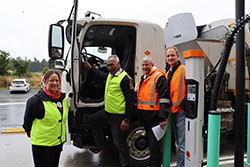
Hutt City Council has today officially unveiled a heavy electric vehicle charging hub at Silverstream Landfill in its drive to cut emissions, transition to lower-carbon waste services and make its infrastructure fit for the future.
A dedicated Heavy EV Charging Hub at a landfill is a first in New Zealand and is a smaller version of initiatives overseas where heavy electric vehicles are the new normal.
Lower Hutt Mayor Ken Laban opened the charging hub alongside councillors, project partners and sector representatives.
He says the project reflects Council’s commitment to reducing emissions from waste and heavy transport, while continuing to deliver reliable services for the community.
“Waste and heavy transport are among our biggest sources of emissions, and electrifying heavy vehicles is one of the most effective ways we can bring those numbers down.”
“This project shows how Lower Hutt can lead on climate action while still delivering the services our community relies on every day.”
The charging hub supports an electric loader operating at the landfill and kerbside collection trucks, replacing diesel-powered vehicles that are traditionally among the highest emitters.
A conventional 20-tonne diesel loader operating at Silverstream was estimated to produce about 68 tonnes of carbon dioxide each year. Switching to an electric loader can reduce those emissions by around 80 to 90 percent, depending on the electricity source.
With vehicle fuel use making up the bulk of landfill emissions, further electrification of on-site construction machinery and vehicles, such as articulated dump trucks, could deliver most of the site’s emission reduction potential over the next five to eight years.
WM New Zealand contracts to council to provide essential kerbside rubbish collection services. WM New Zealand General Manager Lower North Island, Sarah Whiteman, says the hub is an important step in the shift to lower-emissions waste services.
“WM strongly supports the move to electric heavy vehicles and we already operate 60 electric collection trucks across our fleet. We aim to be carbon neutral in our operations by 2050, and infrastructure like this is critical to making that goal achievable.
“Having reliable charging at key operational sites gives us the confidence to keep investing in low-emissions technology while continuing to deliver the services communities depend on. This project shows what can be achieved when councils, contractors and partners work together to deliver real emissions reductions.”
Government agency Energy Efficiency & Conservation Authority (EECA) provided $500,000 co-funding towards the EV charging project. EECA Chief Executive Dr Marcos Pelenur says the charging hub is a strong example of smart infrastructure enabling modern, more efficient services.
“This project shows how the right technology and infrastructure can unlock real productivity and cost benefits for councils and contractors. Heavy electric vehicles offer lower running and maintenance costs, improved efficiency and better working conditions, and this charging hub gives operators the confidence to adopt them. It’s a practical demonstration of how innovation can future-proof essential services while delivering long-term value.
”While the charging hub is already being used by electric kerbside trucks, it will expand to support more service vehicles, helping decarbonise waste services across the city. It may also be made available to other companies visiting the website in the future.
The project reflects Hutt City Council’s commitment to practical climate action and building a cleaner, more resilient future for Lower Hutt.
Search Articles
Search Trucks Database
NZ Truck & Driver Magazine
Read Now



 + EQUIPMENT GUIDE - FREE