
Movement in the regulatory space
Posted: 16-Oct-2026 |
Proposal to mandate safety features won’t proceed
On Tuesday it was announced that Associate Transport Minister Meager has decided not to proceed with mandating safety features, such as electronic stability control (ESC), anti-lock braking system (ABS), lane departure warning (LDW), autonomous emergency braking (AEB) and audible warning devices on quiet vehicles. We had collaborated with several other associations in providing a submission on those proposals late last year. Where there were already clear standards and heavy uptake of features like ABS and ESC, we supported them being mandated.
The associate minister noted many new vehicles entering New Zealand are already fitted with these features and they are expected to become standard over time. This means the proposed requirements would primarily bring forward uptake that is likely to occur anyway. Analysis by Ministry for Cities, Environment, Regions and Transport officials showed mandating the features would provide limited additional safety benefits while potentially increasing vehicle costs.
So, for me this was one for the books. The industry is keen to accelerate the uptake of features that make our heavy fleet safer, but the Minister isn’t. Which also begs the question, why was all that work done?
More than one way of skinning a cat
I found it somewhat bizarre that almost in the same breath as the Minister deciding not to mandate safety features, NZTA has asked for feedback on bringing safer heavy goods vehicles to Australia and New Zealand.
ANCAP, the Australasian New Car Assessment Programme, which is funded by several Australian government departments and New Zealand’s NZTA and AA, is seeking input on the design of an Australasian heavy goods vehicle safety scheme.
We’re currently asking for our members’ views on this. We have already pointed out to NZTA that the ANCAP paper claims; “Without an incentive (such as an ANCAP style intervention) manufacturers are unlikely to provide vehicles with higher safety specifications”. To me this seems completely at odds with the information provided by NZTA in its earlier consultation, which advised that ESC was fitted to 89% of HVs entering the fleet in 2023, and ABS to about 95% of HVs entering the fleet in 2024.
Watch this space.
VDAM Phase 3
We’re still eagerly awaiting the opening of public consultation on VDAM Phase 3 and are hopeful that the Government is serious about unlocking freight productivity benefits.
Elsewhere in today’s edition of the Dispatch newsletter you can read about the official documentation enabling VDAM Phase 2 to take effect on 1 November 2026.
WorkSafe advice
The Health and Safety at Work Amendment Act 2026 was passed in July this year and it comes into full effect on 1 April 2027.
The changes are intended to reduce compliance costs and clarify duty holder obligations. The compliance cost reduction is targeted at small PCBUs now needing to manage a more specific level of risk, namely “critical” safety risks, as opposed to all of them. Small PCBUs are those with fewer than 20 workers for at least nine months of a financial year.
While 1 April is several months away, this amendment will mean members should start considering how to implement any necessary changes now. Among other information WorkSafe has provided, I recommend reading this guidance on the duty of officers and this guidance on working with other businesses managing risk.
Fuel resilience
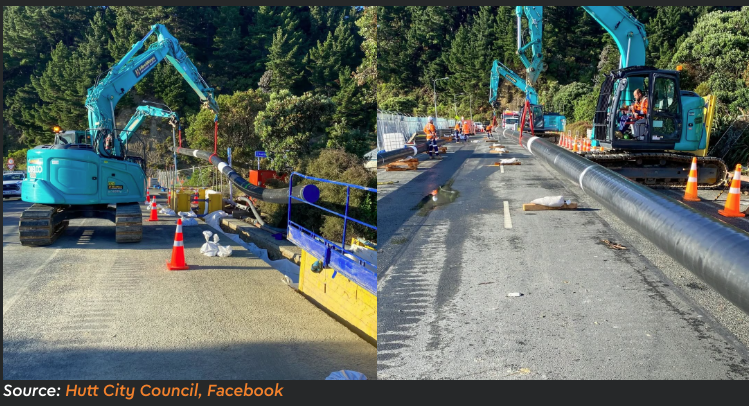
While fuel continues to be a topical issue, Wellingtonians and much of the lower North Island should feel comfort knowing that once the fuel gets to Wellington, the infrastructure, and more specifically the pipeline that gets fuel from the vessel to the bulk storage tanks around Seaview, is now in much better shape.
CentrePort and the oil companies that import fuel have spent what I believe to be around $80 million in undertaking an extensive earthquake resilience upgrade over the last decade or so. Well done to all those teams.
Search Articles
Search Trucks Database
NZ Truck & Driver Magazine
Read Now


 + EQUIPMENT GUIDE - FREE