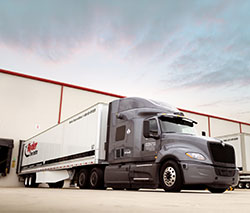
International Launches Level 4 Autonomous Fleet Trial on Live Freight Lane
Posted: 09-Apr-2026 |
International Motors has placed a factory-integrated Level 4 autonomous tractor into live long‑haul service as part of a joint pilot with Ryder System, operating daily along the I‑35 corridor between Laredo and Temple, Texas.
The trial uses International’s second‑generation autonomous LT Series truck, outfitted from the factory with lidar, radar, and camera suites, powered by the S13 Integrated Powertrain and running PlusAI’s SuperDrive driving software.
This integration is intended to show OEM‑level, “virtual driver” capability that can be absorbed into existing customer operations without the need for dedicated autonomous hubs.Ryder is the inaugural fleet customer in International’s autonomous trial program, running the AV on a dedicated 600‑mile daily route to validate real‑world performance, reliability, and operational requirements while moving actual freight for a supply‑chain customer.
Early key performance indicators from the pilot are promising: 100% on‑time delivery, 92% autonomous route coverage under the supervision of a human safety driver, pre‑trip inspections under 30 minutes, and improved fuel efficiency.
These metrics signal practical near‑term value in long‑haul segments where consistent highway conditions allow high rates of autonomy.International and Ryder emphasise that moving autonomy from test tracks into live networks requires tight collaboration to collect operational data on uptime and serviceability, evaluate logistics and support needs, and explore point‑to‑point concepts enabled by software‑defined vehicles.
This operational focus aims to produce an OEM‑validated, end‑to‑end solution (vehicles, digital tools, and support) that customers can run from existing infrastructure.Industry observers note that Level 4 autonomy permits a vehicle to handle driving without human intervention within defined conditions or geofenced routes, which aligns with this pilot’s point‑to‑point, corridor‑based approach and supervised operations.
By concentrating the trial on a regular interstate lane and keeping a human safety driver supervising system performance, the partners balance real‑world validation with risk management.The pilot represents a shift in commercial autonomy testing philosophy: instead of isolated terminal trials or research tracks, manufacturers and fleets are increasingly proving systems on live freight lanes to capture operational edge cases, maintenance cycles, and integration challenges that only appear in production settings.
International’s stated goal is to turn these pilots into scalable commercial deployments while minimizing additional customer complexity.As AV manufacturers continue pairing factory‑integrated hardware with third‑party driving software, pilots like International and Ryder’s will be watched closely for lessons on uptime, service models, and the true economics of long‑haul autonomous trucking, particularly how fuel savings, route coverage, and reduced driver fatigue translate into commercial ROI.
International and Ryder plan to use the trial’s operational insights to finalize launch‑ready product features and identify optimal near‑term use cases in long‑haul transport.For more information, International points stakeholders to its pilot materials and media contacts as it continues data collection and evaluation aimed at taking autonomy from trial lanes to routine logistics operations.
Search Articles
Search Trucks Database
NZ Truck & Driver Magazine
Read Now


 + EQUIPMENT GUIDE - FREE