How Williams & Wilshier slashed driver fatigue
Posted: 26-Nov-2026 |
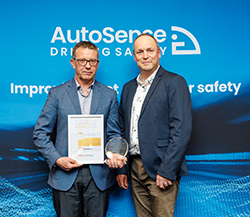
A central North Island transport company’s commitment to driver safety is delivering remarkable results and this month won its General Manager an industry award, demonstrating how technology, education and a supportive workplace culture can transform the way fatigue is managed on New Zealand roads.
Central North Island logging operator Williams & Wilshier has achieved an 80 percent reduction in driver microsleeps - a remarkable achievement for any transport company. It’s the result of nearly a decade spent challenging how driver fatigue is detected, understood and managed.
The achievement comes as Williams & Wilshier General Manager Jason Williams has recently been named Road Risk Manager of the Year at the 2026 Australasian Fleet Champions Awards. Organised by road safety charity Brake, the awards recognise efforts to reduce deaths and injuries involving work vehicles and drivers at work. The winners were announced in Auckland on 10 November.
The accolade recognises a collaboration with fleet safety specialist AutoSense using Guardian by Seeing Machines’ early drowsiness detection technology, specialist driver education and personalised support to tackle fatigue before it becomes a potentially life-threatening event.
Across Williams & Wilshier’s 60-truck operation, average monthly microsleep events have fallen from 21 to just 4.2, while early drowsiness detections have declined by 54 percent.
Operating across the central North Island transporting logs for several major forestry customers, around a third of the company’s fleet operates off-highway, with drivers navigating forestry roads, changing harvesting locations and the demands of heavy vehicle transport.
In 2017, Williams & Wilshier became one of New Zealand’s early adopters of the AutoSense-distributed Guardian driver monitoring technology, after Jason saw a television programme about an Australian truck driver affected by fatigue.
The initial three-month trial was funded through insurer NZI’s Fleet Fit programme, which helps businesses improve driver safety through technology, training and risk management support. Guardian subsequently became a permanent part of Williams & Wilshier’s safety programme.
While the cameras initially attracted some resistance from drivers, the ability to identify actual fatigue events helped build confidence in the technology.
“It was a little bit challenging,” Jason recalls. “It was a definite adjustment for our drivers and some of them didn’t like it and some of them took it on board. “Like any change, it takes time.”
Over time, the company has used Guardian’s monitoring data to identify fatigue patterns and support conversations with drivers about sleep, health, lifestyle and the demands of their work.
Around half a dozen drivers have subsequently accessed treatment for sleep apnoea, while the business has developed a culture where employees are encouraged to speak up when they do not feel fit to drive.
The company can change drivers, adjust start times or allocate shorter shifts when someone is not fit for a normal day’s driving.
“It’s just being able to try and ease whatever’s going on with them,” Jason explains. “And if they’re no good, there’s no point putting them on the road.”
In 2025, Williams & Wilshier became the trial fleet for Guardian’s new Driver Drowsiness and Attention Warning (DDAW) capability, working alongside AutoSense.
Unlike conventional fatigue detection, which identifies events such as microsleeps, DDAW detects earlier signs of drowsiness, providing an opportunity for drivers to recognise and respond to fatigue before it becomes more serious.
The trial was carefully staged to measure the programme’s impact. Initially, drowsiness events were monitored without activating driver warnings, establishing a baseline of fatigue behaviour. In-cab visual warnings were subsequently introduced alongside fatigue awareness training and targeted, one-to-one support for drivers identified as being at greater risk.
In the six months following the interventions, the fleet’s average monthly microsleep events fell by 80 percent compared with the preceding six months. That improvement was sustained over the following four months measured.
The data also revealed that just three drivers were initially responsible for 56 percent of all detected drowsiness events, highlighting an opportunity for more targeted intervention.
Williams & Wilshier used the information to initiate individual conversations about contributing factors, including sleep habits, lifestyle and the demands of particular routes.
By April 2026, these three drivers had achieved an average 66 percent reduction in detected drowsiness events, with individual improvements ranging from 48 percent to 80 percent.
The benefits extended across the wider workforce, with the remaining vehicles also recording a 39 percent reduction in detected drowsiness events.
Importantly, the results were achieved through a combination of early warning technology, driver engagement and practical education.
As part of its fatigue management programme, Williams & Wilshier also worked with AutoSense Fatigue and Sleep Specialist Kat Aubrey, who delivered education to help drivers recognise fatigue and understand how sleep and lifestyle choices affect their fitness to drive.
Jason says hearing from a specialist outside the business helped reinforce the company’s safety messages.
“I think having someone like Kat come and speak to our guys has been really good too. You know, it’s someone different, you know, they’re not hearing the same story from people like myself.”
The education also prompted drivers to examine their sleep quality and everyday habits, with some seeking medical assessments for possible sleep disorders.
“It’s been an education for a lot of people. And I mean, out of that came a significant amount of people going and having sleep apnoea tests,” Jason says.
Kat says the transport company’s commitment to its drivers was central to the programme’s success.
“I think the key with Jason and his team was that they really put the time and effort into the people and the education.”
Rather than simply installing another warning system, Williams & Wilshier incorporated fatigue education into health and safety meetings and maintained regular conversations with its drivers.
“They show that they care and it’s really made a big difference,” Kat says.
For Williams & Wilshier, the dramatic reduction in microsleeps is a milestone, not a finish line.
The company is now in its second year operating under NZTA’s Alternative Fatigue Management System (AFMS), which allows approved operators to take shorter, more frequent rest breaks, supported by evidence of effective fatigue management.
Jason believes the approach has benefited Williams & Wilshier and would like to see it adopted more widely.
“I would like to see that rolled out to the heavy transport sector in New Zealand,” he says.
He also credits AutoSense with playing an important role in the company’s safety journey.
“Honestly, they’ve been great to work with. It’s been fantastic, really,” he says, describing AutoSense as having been “a very big part of changing our culture”.
And his message to other transport operators considering driver monitoring technology is equally straightforward. “You got to give it a go. Don’t be afraid to try it.”
Search Articles
Search Trucks Database
NZ Truck & Driver Magazine
Read Now


 + EQUIPMENT GUIDE - FREE