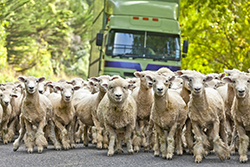
Before the Truck Arrives: Why Livestock Welfare Starts at the Farm Gate
Posted: 15-Jul-2026 |
by Derek Foley, Chair National Livestock Transport and Safety Council
Recently I attended an Animal Welfare Network Aotearoa (AWNA) workshop in Wellington on behalf of the National Livestock and Transport Safety Council (NLT&SC).
AWNA brings together representatives from government agencies, industry organisations, veterinary professionals, researchers, animal welfare organisations, and others involved in animal welfare.
The organisations represented within AWNA influence how animal welfare is managed across New Zealand’s livestock industries, including cattle, sheep, deer, and pigs. The discussions and recommendations that emerge from AWNA often contribute to future improvements in animal welfare practices, regulatory expectations, and industry guidance. Many of its members are directly involved in developing animal welfare policy, Codes of Welfare, industry standards, research, education, and compliance programs.
Attending the AWNA workshop was an important opportunity to ensure the livestock transport industry’s experiences and perspectives were heard by the organisations that influence animal welfare policy, industry standards, research, and compliance in New Zealand.
During the workshop I was given the opportunity to present what I believe are some of the livestock transport industry’s most significant animal welfare and compliance concerns. These centred on the selection, preparation, and presentation of livestock before loading.
The issues raised included: Selection of livestock that are genuinely fit for transport. Livestock standing times before loading. The design, maintenance, and suitability of loading facilities. Heavy motor vehicle access to farms and its impact on safe and efficient loading.
Feed withholding and livestock preparation prior to transport to reduce effluent during transport. NAIT tag responsibilities, particularly ensuring cattle and deer are correctly identified with compliant NAIT tags before transport.
Although these issues originate on-farm, transport operators often inherit the consequences once the truck arrives. Poor preparation can increase animal stress, negatively affect temperament during loading and transport, create unnecessary delays, increase health and safety risks, and result in unnecessary compliance challenges for both drivers and transport companies.
Following the workshop, I participated in a working group that explored these issues in greater detail. One of the most positive outcomes was the genuine interest shown by participants in understanding the practical realities faced by livestock transport operators. Many were surprised to learn that transport operators frequently inherit animal welfare and compliance issues that they have little or no control over, yet often bear the operational costs, compliance obligations, and potential penalties associated with those issues. Improving outcomes requires shared responsibility across farming, transport, and processing – not simply placing the burden on transport operators.
The discussion reinforced that improving welfare outcomes requires shared responsibility across farming, transport, and processing—not simply shifting the burden onto transport operators.
Key Messages - The workshop reinforced several important messages: Good animal welfare starts well before the truck arrives. Livestock selection, preparation, and presentation are critical to safe, efficient, and low-stress transport. Livestock should be fit for transport, correctly identified, and ready to load before the truck arrives. Better loading facilities and suitable heavy motor vehicle access improve safety for livestock, farmers, and drivers.
Appropriate feed withholding before transport reduces effluent issues and improves compliance. NAIT obligations are an on-farm responsibility and should not delay loading or transfer unnecessary compliance risks to transport operators.
The livestock transport industry needs to continue advocating for practical solutions and ensure its experience is represented whenever animal welfare standards, guidance, or policy are being discussed.
The message was clear: livestock welfare starts well before the loading ramp. The workshop reinforced the need for greater recognition that animal welfare, traceability, and compliance are shared responsibilities. Ensuring animals are fit for transport, correctly identified, properly prepared, and ready before the truck arrives will improve welfare, safety, efficiency, and compliance across the sector.
Search Articles
Search Trucks Database
NZ Truck & Driver Magazine
Read Now


 + EQUIPMENT GUIDE - FREE